
Inductions… Top 5 things to know and prepare
From a Doula with over a decade of experience.
Over the years supporting families one of the top fears or concerns from families was hearing the dreaded words “We need to schedule your Induction.” As a new doula I had the view of avoiding this as much as possible. As I have gained experience I have learned to dig deeper into why it is recommended and helping clients choose for themselves, and come to terms with the choice or need. Reframing their mindsets, and preparing their body and changing what they bring to help them have a beautiful birth experience regardless of starting point.
I would love to share the top 5 ways that I work with clients to help them!
- Reframe your expectations
Lets make sure that we understand why your provider is recommending an induction for you. Often simply knowing and understanding the why will help you with the reframing of the concern about the induction. You can read on my blog about understanding the WHY here. Don’t let your concerns or fears prevent open communication with your provider.
Great questions to ask your provider: Is this a policy recomendation, or a medical one? What is the benfit to an induction versus waiting on spontaneous labor? Is my baby at risk, or am I at risk? Please help me understand your reasoning, so that we can get on the same page.
Don’t let your concerns or fears prevent open communicaton with your provider.
Write down questions before your appointment, and bring your partner or your doula to you appointment if that feels supportive.
- Know your Bishop Score.
Knowing your Bishop Score can really help you understand your body's readiness for labor/induction. If induction is the BEST choice for you, knowing your score can really help you understand and set your expectations for labor prep, and what the likely process and timeline will look like for your inductions. You can learn more about your Bishop Score here!
Understanding your score gives you the data you need to move to the next phase of preparation: creating a comfortable and supportive environment.
- What to pack- The Induction Difference
When we are preparing for spontaneous labor there are things that you want to have ready at your home, and a plan in place for what to do during early labor while at home. That script is kind of flipped when you have an induction in the hospital. So there are different things to pack and bring with you for this.
- Pillow and cozy blankets for you and your partner.
- Comfort/Environment: Pillow and cozy blankets for you and your partner. Eye masks and ear plugs.
- Nourishment/Sustenance: Favorite tea and a mug.
- Entertainment/Mindset: Time passes, such as UNO or another fun game for you and your partner to play, a way to watch your favorite shows on streaming, a book to read, or listen to, and bring your mindset of patience.
4. Team Dynamic
Before you get to the hospital for your induction take some of your planning time to consider who all is on your team and how they can best support you.
Often with an induction you can consider which provider you are hoping will deliver your baby, make sure they are not the one starting your induction.
Partners, who do you have in your corner to support you throughout this process, with food and connection. Do you have a way to tag out to someone in the early stages.
Friends and family, are there any people that you want to be around to help distract you from the passing of time? OR do you need someone to help you keep friends and family at bay and informed so that you are not pulled away from this journey?
How is the best way to utilize your doula during this time?
5. Being open, and holding your plan loosely
I cannot stress this enough. Just because your ideal birth plan changed from spontaneous to induction does not mean that you throw the whole plan away. We can still honor the goals, hopes and dreams. Communication is your biggest tool to help you through, use your doula and the nursing staff to make sure that you remember the options you have for the process and the support options you have at the hospital.
There are no wrong choices in birth, just OPTIONS.
In closing, remember by educating yourself, reframing your mindset, and planning intentionally, you are an amazing human who has grown a baby and is giving birth while wildly supported throughout it- in whatever ways you need!!
As a doula supporting families in the vibrant Asheville area and surrounding counties like Buncombe and Henderson, I've had the privilege of witnessing firsthand how prenatal care shapes the journey to parenthood. Nestled in the Blue Ridge Mountains, Asheville offers a unique blend of holistic wellness and cutting-edge medical services, making it an ideal spot for innovative approaches to pregnancy care. If you're an expecting parent searching for prenatal care options in Asheville, NC, you're in luck—local practices provide both time-tested traditional models and a transformative group-based alternative known as Centering Pregnancy.
In this post, we'll dive into the differences between these models of prenatal care, highlight where you can access them locally, and share insights on their benefits—drawn from my experiences and evidence-based research. Whether you're drawn to the intimacy of one-on-one visits or the community spirit of group sessions, understanding these options can empower you to choose what aligns best with your needs. Let's break it down.
The Traditional Model: Personalized, One-on-One Prenatal Care
Most small OB/GYN practices in Asheville and nearby areas, such as Biltmore OB/GYN Physicians or independent providers affiliated with Mission Hospital, follow the traditional obstetric care model. This is the standard approach recommended by the American College of Obstetricians and Gynecologists (ACOG) for routine pregnancies. Here's how it typically unfolds:
- Visit Frequency and Structure: Early in pregnancy, you'll have monthly check-ins, shifting to bi-weekly around 28-32 weeks, and weekly in the final month leading up to delivery. Each session lasts 15 minutes to an hour, depending on your specific needs—like ultrasounds, bloodwork, or discussions about symptoms.
- Focus Areas: These appointments emphasize clinical assessments: monitoring blood pressure, fetal heart tones, weight gain, and screening for complications like gestational diabetes or preeclampsia. Your provider—often an OB/GYN or midwife—builds a tailored care plan, addressing private concerns in a quiet exam room.
- Pros and Cons: This model shines for its privacy and flexibility, allowing deep dives into personal health history. It's widely available across Asheville, from urban clinics to rural outreach in counties like Madison or Yancey. However, with shorter visits, there's less time for education on topics like nutrition or labor coping strategies, which can leave some parents feeling rushed.
From my doula perspective, traditional care works beautifully for families who value individualized attention, especially those with unique medical histories. Practices like Biltmore OB/GYN in Asheville offer this alongside high-risk pregnancy support, ensuring seamless transitions to delivery at facilities like Mission Hospital.
For a traditional model of support, Biltmore OB/GYN is top notch and one of my absolute favorite practices to work with.
The Centering Pregnancy Model: Group Care That Builds Community
Enter Centering Pregnancy—a certified, evidence-based group prenatal care model that's gaining traction in Asheville. Developed over 30 years ago by the Centering Healthcare Institute, it's not entirely "new," but it's revolutionary for our mountain communities, where social isolation can amplify pregnancy stresses. Unlike traditional visits, Centering group prenatal care transforms routine checkups into interactive, supportive gatherings.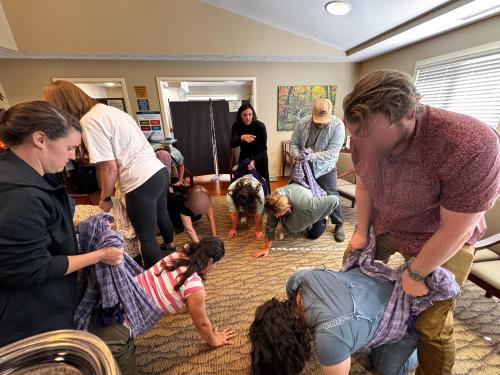
- How It Works: Groups of 8-12 expecting parents (often couples or individuals with support partners) with similar due dates meet for 10 sessions, typically every 1-2 weeks starting in the second trimester. Each 2-hour session blends clinical care with education: You'll collectively check blood pressures and listen to heart tones, then enjoy private one-on-one time with your provider for personalized assessments. The rest are facilitated discussions on everything from early pregnancy symptoms to postpartum recovery.
- Educational Perks: Sessions cover practical topics like nutrition, exercise, labor signs, breastfeeding, and coping techniques for active labor. Many include perks like hospital tours at Mission Hospital or guest speakers on mindfulness—perfect for Asheville's wellness vibe. You'll receive a Centering notebook to track progress, fostering ownership over your health.
- Local Availability: Right now, two practices in the Asheville area offer Centering Pregnancy in NC:
- MAHEC Ob/Gyn Specialists (119 Hendersonville Road, Asheville): Led by certified nurse-midwives like Amanda Murphy, their program emphasizes physiologic birth and community bonds. Email centeringinfo@mahec.net to join.
- Asheville Women's Medical Center : A top-rated spot for group prenatal care in Asheville, they blend Centering with traditional options, earning NCQA recognition for patient-centered excellence.
These programs are open to low- to moderate-risk pregnancies, with referrals for higher-risk cases. As a doula, I've attended births where Centering families arrive feeling connected and prepared—often forming lasting friendships over shared hikes or playdates in the Smokies.
Why Centering Pregnancy Stands Out: Benefits for Families and Providers
What makes Centering model of care so special? Research shows it delivers outcomes equal to—or better than—traditional prenatal care, with no added risks. A landmark study of over 1,000 women found a 33% reduction in preterm births, plus lower rates of low birth weight and preeclampsia. Other perks include higher breastfeeding rates, better prenatal visit attendance, and increased patient satisfaction—women report feeling more empowered and less anxious.
From my vantage point as a doula, the magic lies in the relationships. In a Centering group, you're not just a chart—you're part of a cohort sharing fears, joys, and tips (like the best nausea remedies from local herbalists). This builds resilience, reducing isolation that's common in rural Western NC counties.
But here's an under-the-radar benefit: It elevates providers too. Centering requires a dedicated doctor or midwife team to lead all 10 sessions, diving deep into families' stories, questions, and emotions. I've seen "great" Asheville OBs evolve into exceptional ones—more empathetic, proactive, and attuned to holistic needs. At Asheville Women's , for instance, facilitators report stronger partnerships with patients, leading to fewer interventions during labor. It's a win-win: Families get richer support, and providers grow through meaningful connections.
Choosing Your Path: Tips for Asheville Expecting Parents
Deciding between traditional prenatal care and Centering Pregnancy? Consider your personality—if you thrive on community, go group; if privacy is key, stick with one-on-one. Both are covered by most insurances, but confirm with your provider. Start by scheduling a preconception or early prenatal chat—many Asheville practices offer virtual intros.
Local resources amplify either model: Pair care with doula support (like mine!), prenatal yoga at Asheville Community Yoga, or nutrition guidance from Mountain Area Pregnancy Services (MAPS). Remember, the goal is a healthy, joyful pregnancy tailored to you.
Asheville's prenatal landscape is evolving, blending mountain serenity with innovative care. Whether traditional or Centering, these models honor your journey. Ready to explore? Contact MAHEC or Asheville Women's today. What's your prenatal care question? Drop it in the comments—I'm here to help.
Hey there, WNC mamas and families! As a Christian doula and Lamaze educator serving our mountain communities, I know the word ‘induction’ can sound a bit *labor-ious*—maybe even a little scary. (Why did the mama fear induction? Because she didn’t want to *push* her luck!) But here’s the good news: with the right info and a sprinkle of faith, you can feel empowered, not overwhelmed. In this post, I’ll break down the Bishop Score—what it is, why it matters, and how to naturally prepare your body for labor or induction. Let’s trust God’s timing (Jeremiah 1:5—‘Before I formed you in the womb I knew you’) and get ready for a *womb-derful* journey!
A Little Bishop Score History
Back in 1964, Dr. Edward Bishop, a rockstar OB-GYN in America, set out to make inductions easier for mamas like you. He studied 500 women needing inductions and created a system called "Pelvic Scoring for Elective Induction"—what we now call the Bishop Score. Before his work, inductions were a bit of a guessing game, based on a provider’s gut feeling. Dr. Bishop gave us a clear, standard way to measure cervical readiness, reducing unnecessary interventions and boosting vaginal birth success. (Talk about a *score* for mamas!) In 1974, Dr. Calder simplified the scoring system by tweaking the point ranges, making it easier for providers to use in busy hospitals—because who doesn’t love a *bishop* of clarity?
What’s the Bishop Score Measuring?
I wanted to share this artical written by our lovely Brittany Bollinger.
The Benefits of Hiring a Postpartum Doula and Pediatric Sleep Coach: Navigating Newborn Sleep Challenges
Welcoming a newborn into the family is a momentous occasion filled with joy, but it also brings a unique set of challenges, particularly concerning sleep. New parents often find themselves overwhelmed by a plethora of conflicting advice on newborn sleep, leaving them feeling helpless and exhausted. Each baby is unique, and so too are the routines and lifestyles of each family. Introducing a baby can significantly disrupt the sense of normalcy in a household. To navigate these challenges effectively, hiring a postpartum doula and a pediatric sleep coach can be invaluable.
The Role of a Postpartum Doula
A postpartum doula offers essential support to new parents, helping them acclimate to their new roles and responsibilities. These trained professionals provide both emotional and physical assistance in the weeks and months following birth. Daytime support from a postpartum doula can encompass various tasks, including:
- Education and Guidance: Doulas are well-versed in newborn care and can quickly help parents understand their baby's routines and sleep patterns. This knowledge enables families to integrate their newborn into their lives more smoothly.
- Emotional Support: The postpartum period can be emotionally taxing. A doula can offer reassurance and guidance, alleviating some of the anxiety and uncertainty that new parents often experience.
- Practical Help: Doulas can assist with meals that support postpartum recovery, care for the baby, and provide support for parents as they navigate the early days of parenting.
